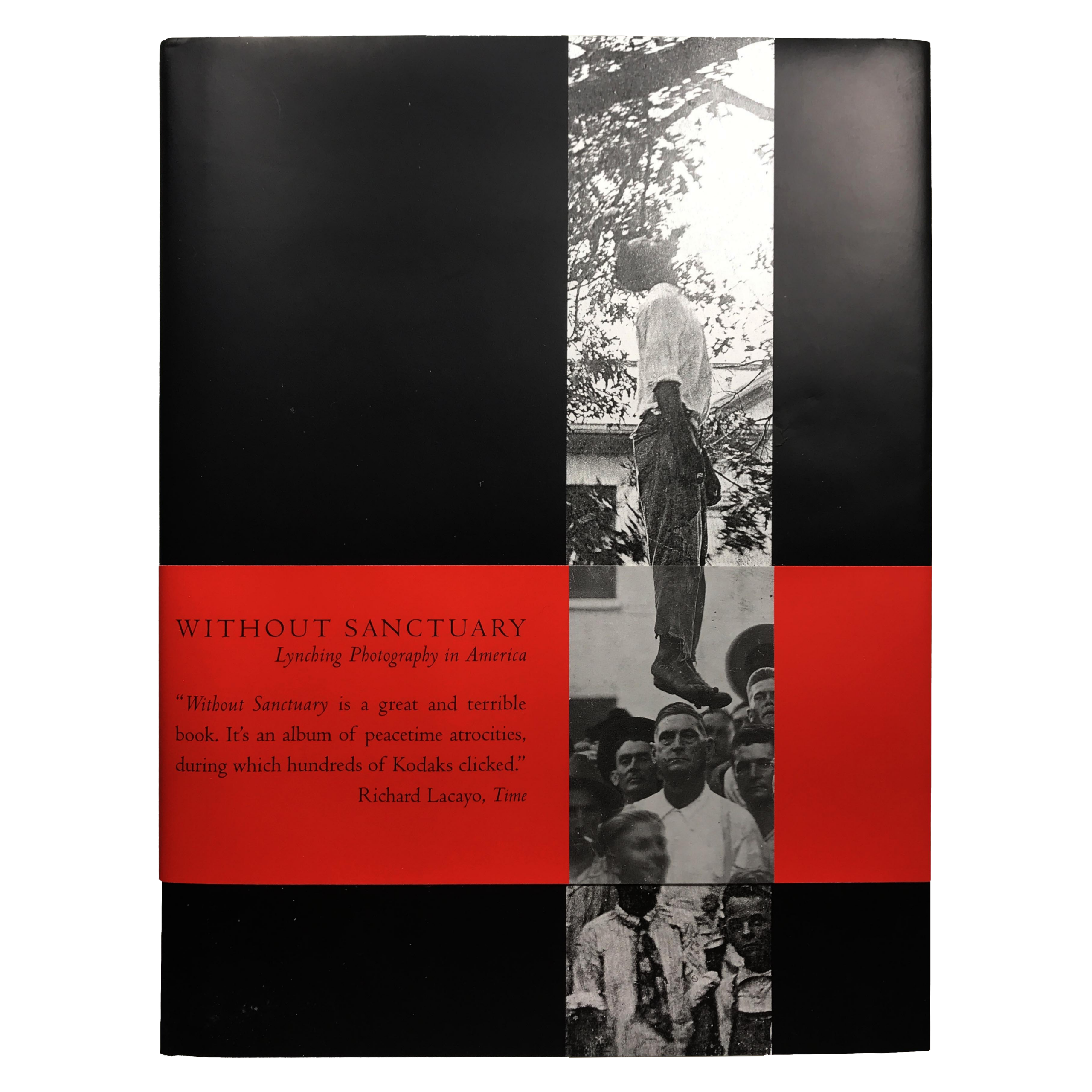
Thank you for viewing Without Sanctuary. When I began acquiring the lynching photos in Without Sanctuary some 36 years ago, I did not intend to create a book. I could not define the word lynching accurately. In fact, the first lynching postcard I bought was of Leo Frank. It was almost 2 years before I identified it as a lynching. University libraries did not admit to having a lynching photo in their archives. Historians denied that a lynching had taken place in their home county. Searches on the internet were equally unhelpful.
The images’ sting has not diminished over the years. With each image I find, I gasp with disbelief. On those occasions when I find another lynching photo, the first thought through my mind is: Can you believe this? Of course, I do.
In January of 2000, when the book was first published, few people could not have known what power and effect the photos would have on American lives. Grandparents in their 80s, after seeing the book or reading about it, spoke to their adult children for the first time about the killing of an uncle or other relative. Time and again, African American parents have remarked that they had been unable to impress upon their children the very real dangers they faced in a modern America; but the published photos sparked more meaningful conversations. African American college graduates were upset that they had never been taught about America’s brutal legacy of lynching.
The true consequences of the country’s racially violent practices become crystal clear when families described their own fatal experiences with white rule and mob think.
I would like to encourage you to visit our website. You can read media stories and watch videos that document the initial release of Without Sanctuary.
Sincerely,
James E. Allen